Luxury Fashion's Scandal Suppression Service: How $175 'Aesthetic Amnesia' Guarantees Your Fashion Disasters Never Happened
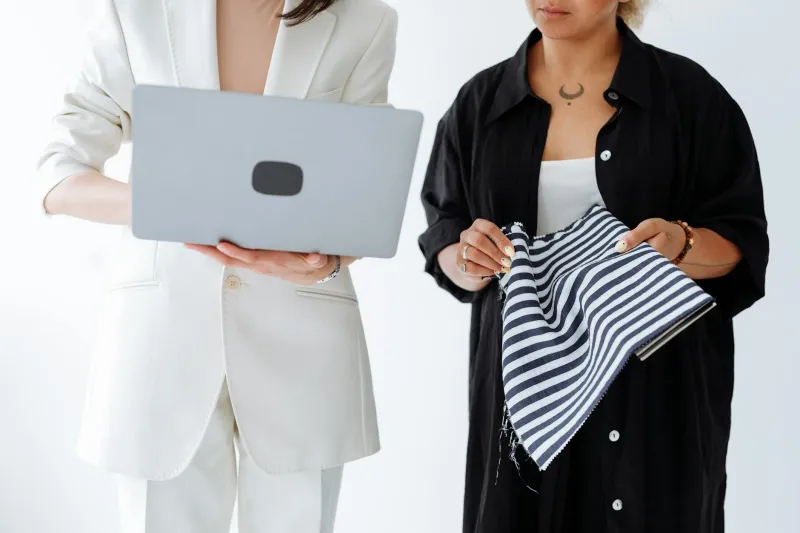
The Ultimate Fashion Emergency Response Team
In a groundbreaking move that redefines damage control, luxury fashion conglomerate Prestige Holdings announced their latest venture: professional outfit amnesia services. For a modest fee of $175, customers can now hire trained "Style Ombudsmen" to ensure their most regrettable fashion moments disappear from human memory faster than last season's trends.
"We've all been there," explains Chief Aesthetic Officer Miranda Blackstone, adjusting her $3,000 blazer with the confidence of someone who has never worn Crocs to a board meeting. "You think you're being avant-garde, but really you're just wearing a sequined tracksuit to your grandmother's funeral. That's where we come in."
The Science of Selective Fashion Forgetting
The service operates through what the company calls "Comprehensive Aesthetic Erasure Protocol," a 47-step process that begins with identifying every witness to your fashion crime. Teams of Style Ombudsmen fan out across your social circle, armed with NDAs thicker than the latest Vogue September issue and an arsenal of psychological techniques that would make the CIA jealous.
"We start with immediate family," explains Senior Ombudsman Trevor Blackwell, whose business card lists his occupation as "Memory Curator." "Parents are surprisingly easy—just remind them of their own 1980s shoulder pad phase and they'll agree to forget anything. Siblings require more finesse, usually involving the strategic deployment of embarrassing childhood photos."
The process escalates to what insiders call the "Nuclear Option": hiring actors to stage elaborate scenarios that retroactively explain your outfit choice. Wore a ball gown to Whole Foods? Congratulations, you were actually rushing from a charity gala and had no time to change. The receipt for your organic kale becomes evidence of your philanthropic dedication.
 Photo: Whole Foods, via i.pinimg.com
Professional Gaslighting for the Fashion-Forward
Perhaps most impressive is the company's "Retroactive Narrative Reconstruction" department, where teams of former screenwriters craft elaborate backstories for inexplicable outfit choices. Their crown jewel: convincing an entire wedding party that the groomsman who wore flip-flops and a tuxedo was actually making a "powerful statement about the fluidity of formal wear expectations."
"We don't just erase memories," boasts Narrative Director Chloe Pemberton, whose own outfit appears to be three scarves and a prayer. "We replace them with better ones. That time you wore a bikini to a job interview? Now it's a bold commentary on workplace dress codes that got you featured in Harvard Business Review."
 Photo: Harvard Business Review, via c8.alamy.com
The service includes a dedicated "Witness Management Team" that monitors social media for photographic evidence of your fashion disasters. Using advanced digital manipulation and what they euphemistically call "platform relationship management," they ensure that Instagram post of you in head-to-toe denim simply never existed.
The Premium Tier: Total Reality Reconstruction
For an additional $125, customers can upgrade to "Aesthetic Reality Revision," where the company doesn't just erase bad outfits—they implant memories of good ones. Friends and family will suddenly recall you wearing a perfectly appropriate navy blazer to that BBQ, not the sequined romper that actually made children cry.
"We had one client who wore a wedding dress to a casual brunch," recalls Senior Memory Technician James Morrison, whose job title alone suggests we've crossed some sort of societal Rubicon. "By the time we were finished, everyone remembered her wearing a chic midi dress and starting important conversations about sustainable fashion. She got three job offers that week."
The service has proven particularly popular among influencers, who face the unique challenge of having their fashion mistakes preserved in high-definition across multiple platforms. For them, the company offers "Influencer Integrity Insurance," a monthly subscription that automatically activates whenever their engagement drops below acceptable levels.
The Ethical Implications of Fashionable Forgetting
Critics argue that the service represents a troubling commodification of truth itself, but supporters counter that fashion has always been about creating reality rather than reflecting it. "We're not changing history," insists company founder Alexander Worthington III, whose net worth apparently grants him the authority to redefine objective reality. "We're simply curating it."
The service has already expanded to include "Preemptive Aesthetic Protection," where customers pay to ensure their future fashion disasters are immediately forgotten. For $299 monthly, subscribers receive a team of Style Ombudsmen who follow them everywhere, ready to spring into action the moment they reach for those controversial cargo shorts.
As fashion week approaches and the stakes for sartorial perfection reach new heights, the Aesthetic Amnesia service represents perhaps the ultimate luxury: the right to make mistakes without consequences. In a world where every outfit is photographed, catalogued, and judged by millions of strangers, the ability to simply pretend your fashion disasters never happened might be the most exclusive accessory of all.
After all, in an industry built on the premise that clothes make the man, it was only a matter of time before someone figured out how to make the man unmake the clothes—for the right price, of course.