Field Guide: The Seven Sacred Tribes of Remote Workers Who Bought Office Clothes for an Office That No Longer Exists
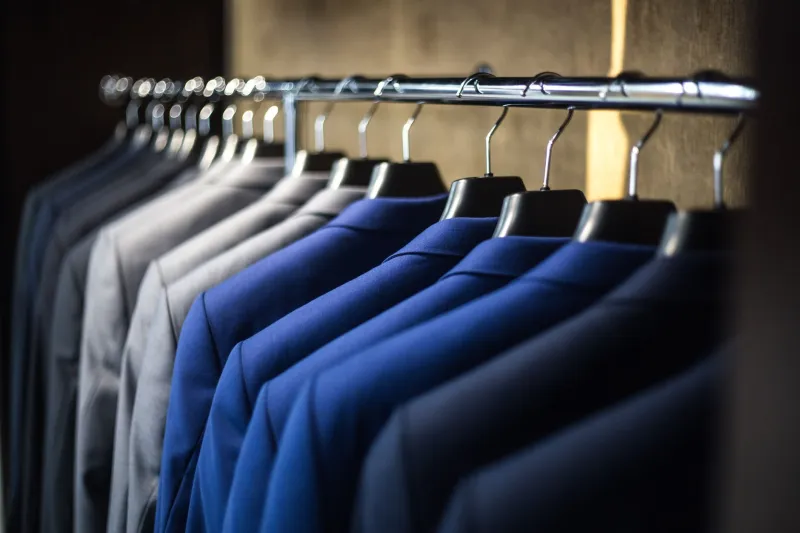
In the spring of 2020, America's professional class discovered something liberating, terrifying, and ultimately permanent: you could do your entire job in sweatpants. The commute vanished. The open-plan office dissolved. The concept of 'business casual' entered a kind of philosophical hospice care from which it has never fully emerged.
And yet.
And yet.
Across this great nation, millions of remote workers have continued — with remarkable dedication, with almost moving sincerity — to purchase, maintain, and carefully organize clothing designed for an office experience that has been functionally cancelled. They buy blazers. They rotate dress shirts. They own structured tote bags that have never touched a subway.
This is their field guide.
Tribe One: The Optimistic Blazer Hoarder
Natural Habitat: A home office in the greater Denver metro area, surrounded by blazers arranged by weight, then by color, then by a proprietary system only she understands.
Identifying Characteristics: Owns eleven blazers. Has worn two of them since March 2020, both for video calls in which only the top third of the garment was visible. Currently eyeing a twelfth blazer described online as 'polished-casual' — a category of clothing that exists nowhere in the physical world but lives rent-free in her browser history.
Core Mythology: The office is coming back. Not this quarter, maybe, but soon. And when it does, she will be ready. She will walk through those doors — which are currently being subleased to a logistics startup — wearing a blazer so precisely right for the moment that her colleagues will understand, without words, that she never really left.
Spending Since 2021: $1,840, conservatively.
Tribe Two: The Woman Who Bought Heels Just In Case
Natural Habitat: A closet in a Nashville townhouse, specifically the shelf where four pairs of block-heeled mules sit in their original boxes, tissue paper intact, waiting.
Identifying Characteristics: Cannot articulate what 'just in case' means, exactly. A conference, maybe. A client dinner. A situation in which appearing in heels would communicate something important about who she is professionally. She bought them during a period of optimism in late 2022 when 'return to office' felt imminent and the heels felt like a reasonable hedge against the future.
Core Mythology: There will be an occasion. There is always, eventually, an occasion. The heels are not an irrational purchase. They are an investment in readiness. She is ready. She is so ready. She has not left the house in anything other than white sneakers in fourteen months but that is simply not the point.
Spending Since 2021: $680 in footwear alone, plus $45/month in closet organization systems designed to preserve shoes she is not wearing.
Tribe Three: The Man Whose Entire Wardrobe Is Business Casual for a Business That Went Fully Distributed
Natural Habitat: A home office in suburban Columbus, Ohio, where he sits in pressed chinos and a button-down Oxford at a standing desk, on a Zoom call where every other participant is visibly wearing a hoodie.
Identifying Characteristics: He was business casual before it was cancelled, and he remains business casual now, in defiance of all social evidence. His company went fully distributed in 2021. His CEO does all-hands calls from what appears to be a garage. His direct reports have started wearing pajama tops ironically. He presses his chinos. He presses them every Sunday. This is who he is.
Core Mythology: Dressing professionally is a mindset. It signals to himself, and to the algorithm that renders his video feed, that he takes his work seriously. Also, he spent $3,200 on work clothes between 2018 and 2020 and the sunk cost is simply not something he is prepared to process emotionally right now.
Spending Since 2021: $910 in new business casual items, plus $200/year in dry cleaning for clothes that accumulate no visible dirt because they go nowhere.
Tribe Four: The Structured Tote Collector
Natural Habitat: An entryway in a Brooklyn apartment, where six structured leather tote bags hang on a dedicated hook system, each one capable of holding a laptop, a planner, a water bottle, and the ambient professional identity she is no longer required to perform anywhere outside her own home.
Identifying Characteristics: Bought her first structured tote in 2019 because 'a good bag is forever.' Bought three more between 2020 and 2022 because 'this one is slightly different and the proportions are better for a smaller laptop.' Currently researching a fifth because she saw it described as 'the thinking woman's commuter bag,' which is a sentence that should not have worked on her but absolutely did.
Core Mythology: The bags are not for commuting. They are for identity maintenance. They communicate, to herself and to the UPS driver and to the barista at the place around the corner, that she is a person with somewhere important to be. She will be there shortly. She is just working from home first.
Spending Since 2021: $2,100 in structured bags and $180 in leather conditioner to keep them pristine for the commute.
Tribe Five: The Conference Outfit Preservationist
Natural Habitat: A guest bedroom in a Seattle home that has been converted into a 'wardrobe archive,' containing seventeen outfits assembled for conferences that were either cancelled, went virtual, or are technically still on the calendar but will almost certainly go virtual.
Identifying Characteristics: Approaches conference dressing the way a museum curator approaches a traveling exhibition. Each outfit is complete — shoes, bag, jewelry, contingency layers — and documented in a notes app with the conference name, the session she planned to attend, and a brief rationale for why this particular look communicated the right balance of 'approachable expert.'
Core Mythology: The conferences are coming back. And she will be devastatingly prepared. The 2023 industry summit that went hybrid? She had three outfits ready. She attended via webinar in a fleece. The outfits are still there. They are aging beautifully.
Spending Since 2021: $1,650 in conference-specific clothing, plus $75 in garment bags.
Tribe Six: The Subway Outfit Purist
Natural Habitat: A Chicago apartment, specifically a mental state in which the act of getting dressed for an imagined commute is the primary organizing ritual of the day.
Identifying Characteristics: Still gets fully dressed every morning. Not for the video calls — those end at the collarbone anyway. Not for the afternoon walk — that's a different outfit category entirely. But for the idea of the commute: the layering, the practical heel height, the bag that fits under a seat. She dresses for a subway ride that begins in her hallway and ends at her desk four feet away.
Core Mythology: Routine is everything. The outfit is the commute. The commute is the transition. Without the transition, work bleeds into life and life bleeds into work and everything becomes undifferentiated ambient stress. The $340 transit-appropriate trench coat is not a luxury. It is psychological infrastructure.
Spending Since 2021: $2,200, all of it defensible, none of it questioned.
Tribe Seven: The Return-to-Office Preparer Who Has Been Preparing for Three Years
Natural Habitat: Everywhere. Every city. Every industry. Every remote job posting that still says 'hybrid potential' in the fine print.
Identifying Characteristics: Has been actively, methodically preparing for a return to office since the first tentative emails arrived in late 2021. Has since updated the 'return wardrobe' four times to account for shifting trends. Has spent, in total, more on the anticipated return than they spent on actual office clothes during the five years they were actually going to an office.
Core Mythology: It is not about the office. It was never about the office. It is about the version of themselves that exists in an office — competent, visible, professionally legible in three dimensions rather than a thumbnail. They are buying clothes for a self that commutes. They are keeping that self alive. They are doing it one structured tote at a time.
Spending Since 2021: Immeasurable. Emotionally and financially.
There is something genuinely, achingly American about all of this — the optimism of the prepared wardrobe, the refusal to concede that the scenario you dressed for has been permanently rescheduled. These are people who understand, on some level, that the office isn't coming back the way it was. And they are buying blazers anyway.
Because you never know.
And because the blazer was on sale.
And because being ready costs something, and they are willing to pay it.