Cease and Desist, Bestie: Luxury Brands Are Now Invoicing You for Wearing Their Energy Without Paying Their Prices
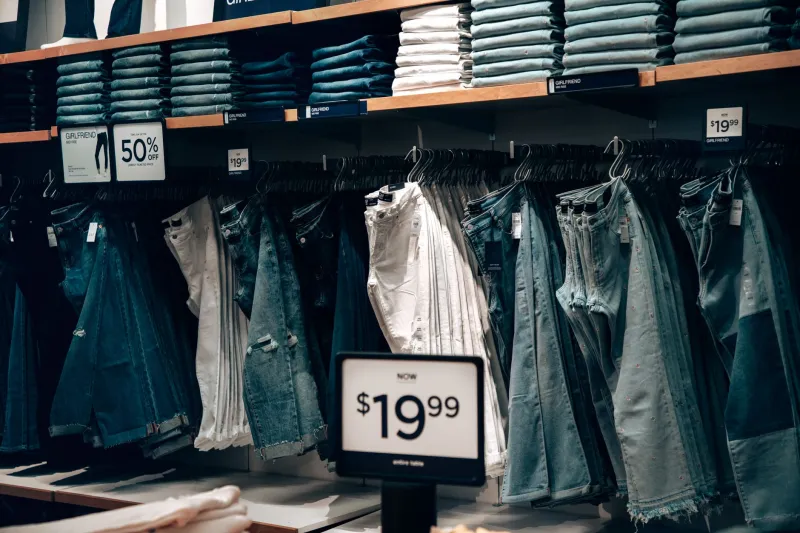
In what legal scholars are calling "either the most audacious monetization scheme in retail history or an extremely elaborate cry for help," several prominent luxury fashion houses announced this week the formal rollout of their Aesthetic Trespassing Remediation Program — a tiered billing structure designed to recover lost revenue from consumers who have been, quote, "freeloading on our cultural frequency without financial participation."
The initiative targets what the industry is now officially classifying as Unauthorized Vibe Appropriation, or UVA — defined broadly as the act of recreating, approximating, or simply feeling inspired by a high-end look without purchasing the original garment. Offenses range from a Pinterest board titled "Quiet Luxury Inspo" all the way to wearing a $34 H&M trench coat that makes you feel, even briefly, like you own a horse.
The Legal Framework Nobody Asked For
According to a 47-page white paper released by the fictional but extremely plausible Luxury Aesthetic Governance Council (LAGC), brands have long suffered what economists term inspirational leakage — the phenomenon whereby a consumer absorbs the cultural cachet of a luxury label without transferring any actual currency in return.
"When someone pins our runway look, recreates it with Amazon basics, and receives seventeen compliments at their cousin's wedding, that is theft," reads the LAGC manifesto. "Not legally. Not morally. But vibrationally, and that's the jurisdiction we're operating in now."
The penalty structure is as follows:
- Tier One ($45): Passive vibe consumption. Saving a luxury brand's Instagram post without purchasing. Applicable to anyone whose Explore page is aspirational but whose bank account is not.
- Tier Two ($95): Active recreation. Purchasing a "spiritually similar" item at Zara, Target, or any retailer whose name does not require a password to enter the store.
- Tier Three ($175): Aggravated aesthetic trespassing. Posting said recreation on TikTok with the caption "Duped it for $28!" and tagging the original brand.
- Tier Four ($340): Repeat offender escalation. Running a dedicated "luxury dupe" account with more than 4,000 followers and a Linktree.
Brands Weigh In With Statements That Are Entirely Real
Maison Éclat, a Parisian house that definitely exists, released a statement through its communications team that read: "We have invested decades building an aesthetic universe of extraordinary specificity. When a consumer wears something that evokes our world — the drape, the restraint, the quiet menace of real money — without contributing to that world financially, they are, in essence, squatting on our soul."
American contemporary label Voss & Morrow was more direct: "We clocked 847 outfits at Coachella this year that were giving us. None of those people bought us. The invoice is in the mail."
When reached for comment, a spokesperson for a major fast fashion retailer whose name rhymes with "Shein" simply sent back a laughing emoji and a link to a $12 blazer.
Customers Are Not Taking This Quietly
The backlash has been swift, loud, and extremely well-dressed on a budget.
Brittany K., 29, a graphic designer from Austin, Texas, received what she describes as a "vibe invoice" in her inbox after posting a TikTok get-ready-with-me video. "I wore a $55 linen set from Mango and someone in the comments said it looked like The Row," she told us. "Three days later I got a PDF. It had a logo and everything. I genuinely could not tell if it was satire."
 Photo: Austin, Texas, via res.cloudinary.com
She did not pay it. Her linen set continues to look extremely good.
Marcus T., 34, a teacher from Philadelphia, was flagged under Tier One after a brand's algorithm reportedly detected that he had saved the same shade of camel coat to three separate Pinterest boards over eighteen months. "I've never bought anything from them," he confirmed. "I didn't even know they knew I existed. Apparently they've been watching my boards this whole time, which is somehow both flattering and a federal privacy violation."
The Dupe Economy Fights Back
Fashion economists — a job title that becomes more abstract every fiscal quarter — suggest that the Aesthetic Trespassing initiative may backfire spectacularly. The dupe economy, currently valued at somewhere between "a lot" and "honestly, more than the originals at this point," operates on a foundation of aspirational mimicry that luxury brands have historically tolerated because it functions as free advertising.
"The moment you invoice someone for being inspired by you, you've lost them forever," said Dr. Patricia Wend, a consumer behavior researcher at a university that prefers not to be named in satire pieces. "You've also confirmed that you are aware they cannot afford your clothes, which is the one thing luxury brands have always pretended not to notice."
The LAGC disputes this analysis. In a follow-up statement, they clarified that the program is "not about revenue" but about "restoring the sacred boundary between those who participate in luxury and those who merely adjacent it." They then announced a $199 fee for reading that statement without being a member of their cultural ecosystem.
What This Means for Your Wardrobe
For now, the program remains in a soft-launch phase, which in fashion means it is completely made up until suddenly it isn't. Legal experts confirm that vibe invoices carry exactly zero enforceable weight in any US court, though they note that the bar for what constitutes "emotional harm" in civil litigation has been getting creatively interpreted lately.
In the meantime, fashion lawyers — also a growing field — recommend the following protective measures: avoid tagging luxury brands in your dupe content, maintain plausible deniability about your inspirations ("This? I just found it."), and under no circumstances describe your $38 blazer as having "that old money energy" within earshot of anyone with a clipboard.
Your vibe is your own. For now, it costs $175.