Closet Pathology: How Luxury Fashion's New 'Style Clinicians' Are Diagnosing Your H&M Purchases as a Medical Emergency
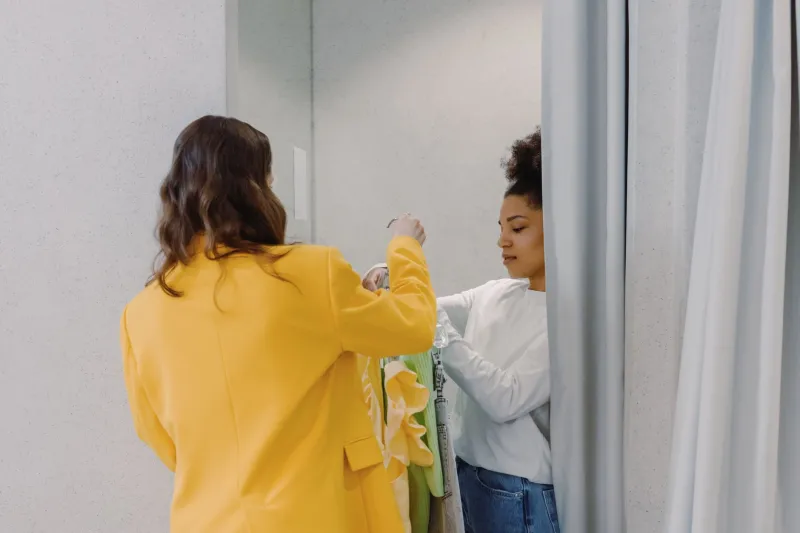
The letter arrived — well, technically it was a DM, but it was formatted like a letter, which is somehow worse — on a Tuesday. It came from something called the Institute for Aesthetic Wellness and Wardrobe Rehabilitation, and it informed me that based on my public Instagram grid, I was exhibiting "advanced-stage Aesthetic Personality Disorder, subtype: Transitional Chaos with Clearance Rack Dependency."
The diagnosis cost $329.
The cure, naturally, would cost considerably more.
The Birth of Fashion's Favorite New Illness
Aesthetic Personality Disorder — or APD, because every legitimate-sounding condition needs an acronym — is the latest offering from a growing constellation of luxury-adjacent "style clinician" practices that have quietly colonized the space between fashion retail and actual therapy. The premise is elegantly simple and completely unhinged: your wardrobe isn't just unflattering, it is symptomatic. It is evidence of deep psychological fracture. It is, in the clinical language of these practitioners, "a cry for cashmere."
The movement appears to have emerged somewhere in the overlap between high-end personal styling and the broader wellness industry's longstanding project of turning ordinary human experiences into diagnosable, billable conditions. Feeling tired? That's adrenal dysregulation. Feeling uncertain about what to wear? That, apparently, is APD, Stage Three, and you should probably sit down.
"We're not just stylists," explained one practitioner — who goes by the professional name "Dr. Celeste V." and whose doctorate is, she clarified, "vibrational" — in a recent interview with a newsletter that has fourteen thousand subscribers and zero editorial standards. "We're treating the whole aesthetic being. The clothes are just the symptom. The pathology runs much deeper."
The pathology, it turns out, runs all the way to your credit limit.
A Diagnostic Breakdown (Of Both Your Wardrobe and Your Finances)
The standard APD intake process begins with a $329 "Initial Aesthetic Assessment," during which a style clinician reviews your closet — either in person or via a Zoom call where you hold garments up to the camera like a hostage situation — and identifies your specific disorder subtype. The diagnostic manual, which is a Google Doc with a very nice font, lists seventeen recognized subtypes, including:
Polychromatic Dissociation — owning more than four colors. Treatment: a $2,200 neutral capsule wardrobe.
Fast Fashion Trauma Response — any garment purchased at Target, Old Navy, or "honestly, Zara is borderline." Treatment: a twelve-week "brand detox" program at $89 per session.
Transitional Identity Fragmentation — having clothes from more than one decade in your closet simultaneously. Treatment: a full wardrobe funeral service ($450, candles included) followed by a "rebirth edit" starting at $1,800.
Clearance Rack Dependency — self-explanatory, deeply shameful, aggressively monetized.
The assessment concludes with a written treatment plan — formatted, critically, to look exactly like an actual medical document, complete with a logo that features a caduceus made of coat hangers — and a "recovery roadmap" that spans anywhere from six months to two years of paid follow-up consultations.
The Wellness-Industrial Complex Finds Its Runway
It would be easy to dismiss this as a fringe phenomenon practiced by a handful of influencer-adjacent grifters in Scottsdale and West Hollywood. But the scale of the operation suggests something more organized. Several mid-tier luxury brands have quietly begun offering APD screenings as a complimentary service — "complimentary" meaning free, not meaning they are being nice to you — in-store, with the predictable outcome that every single customer receives a diagnosis and a treatment plan that happens to involve their current inventory.
 Photo: West Hollywood, via www.digitalbusiness.africa
One brand, which shall remain nameless because their legal team is apparently very active, recently piloted a "Wardrobe Wellness Clinic" in their Soho flagship. Customers who booked the free fifteen-minute consultation reported emerging with diagnoses, pamphlets, and a deep, inexplicable conviction that they needed a $780 linen blazer to begin healing.
"I went in to return a belt," said one participant, who asked to be identified only as "Margaux, but not my real name, my aesthetic name." "I left with a diagnosis of Synthetic Fiber Avoidance Disorder and a payment plan."
The Unlicensed Practitioners Thriving in Fashion's Medical Vacuum
What makes the APD economy so remarkable is the complete absence of any credentialing requirement whatsoever. Style clinicians are trained by other style clinicians, certified by organizations they themselves founded, and regulated by absolutely no one. The American Psychological Association has not commented on APD, presumably because they are busy with actual psychology and cannot stop laughing long enough to issue a statement.
This vacuum has proven extraordinarily fertile. Courses promising to certify new "Aesthetic Wellness Practitioners" in as little as six weeks are selling out at $1,200 a seat. The curriculum, according to one syllabus obtained by Vogue Vapor through the heroic act of clicking a public Instagram link, includes modules on "Reading the Energetic Wardrobe," "Trauma-Informed Trend Forecasting," and "Billing Structures for the Sensitive Aesthetic Client."
That last one is three hours long. It is the most comprehensive module in the course.
The Cure That Keeps Billing
Perhaps the most elegant feature of the APD diagnostic model is its design for chronicity. Unlike, say, a broken leg — which heals, rudely, without ongoing financial commitment — Aesthetic Personality Disorder is understood by its practitioners to be a "lifelong management journey." Seasons change. Trends shift. Your disorder, conveniently, evolves alongside them, requiring fresh assessments, updated treatment plans, and new prescriptions each quarter.
"Recovery isn't linear," Dr. Celeste V. noted sagely. "Sometimes you think you've achieved full aesthetic integration, and then you buy something from Amazon and we have to start over."
Starting over, for the record, costs $329.
It is the same as the initial diagnosis. The rate has not changed. The only thing that has changed is that now you own a $780 linen blazer and still feel, somehow, deeply unwell.
Which is, one suspects, exactly the point.