How 'Having Less Stuff' Became a $50,000 Hobby for Rich People Who Buy Everything
The Paradox of Premium Emptiness
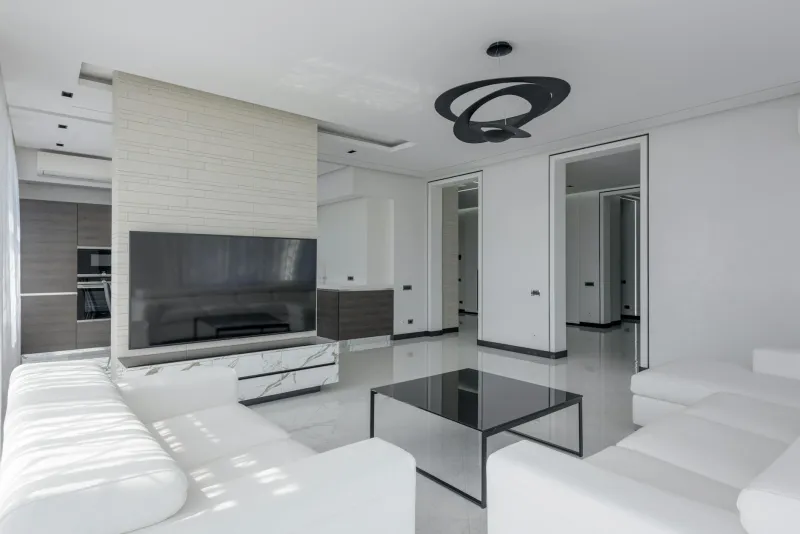
In the gleaming white void that is Kendall Morrison's $4 million Tribeca loft, every absence costs more than most people's annual salary. Her "curated emptiness" includes $2,100 Italian hangers holding invisible clothes, $890 handcrafted wooden shelves displaying purposeful nothingness, and a $3,400 "meditation corner" that's literally just expensive floorboards arranged in a square.
"People don't understand that minimalism isn't about having less," Morrison explains, gesturing toward her $1,200 "artisanal air purifier" that's actually just an empty glass cube. "It's about having the right kind of less. There's a huge difference between being poor and being intentionally sparse."
Welcome to luxury minimalism, where the absence of things has become the ultimate status symbol, and emptying your home costs significantly more than filling it ever did.
The Economics of Nothing
The numbers are staggering. According to fictional market research firm Void Analytics, the luxury minimalism industry generated $847 million in 2023, with average spending per household reaching $23,000. This covers everything from "negative space consultants" ($400/hour) to "emptiness maintenance" services ($200/month) that ensure your nothing stays properly arranged.
"We're not selling products," explains Henrik Larsen, founder of premium minimalism brand Absence. "We're selling the sophisticated restraint to not buy products. It's much more expensive because it requires actual discipline."
Absence's bestsellers include their $599 "Essential Void Starter Kit" (an empty box with a certificate of authenticity), $1,200 "Curated Air Samples" from minimalist homes around the world, and their premium $3,800 "Nothing Subscription Service" that delivers an empty package every month.
Instagram's Invisible Influence
The trend exploded on social media, where minimalist influencers compete to photograph the most expensive emptiness. @SereneSpaces has 2.3 million followers watching her document rooms that cost $50,000 to achieve but contain approximately seven visible objects.
"My audience craves authenticity," she says, standing in her $18,000 "essential living room" that features one $4,200 chair, strategically positioned to suggest the absence of all other furniture. "They're tired of influencers showing off their stuff. Now they want to see what we're sophisticated enough not to own."
The competition has become absurd. One influencer gained 400K followers by posting a $12,000 closet containing only three white t-shirts, each costing $380. Another went viral with her "Minimalist Shoe Collection" — five pairs of identical sneakers arranged with mathematical precision, totaling $2,100.
The Consultants of Less
Where there's artificial scarcity, there are experts ready to monetize it. "Subtraction Specialists" now command $500/hour to help wealthy clients achieve the perfect balance of expensive emptiness. Their services include "Negative Space Optimization," "Void Curation," and "Absence Architecture."
"Minimalism is incredibly complex," insists Dr. Sophia Chen, whose "Less Is More Academy" charges $3,200 for weekend workshops on "Strategic Non-Ownership." "You can't just throw away your stuff randomly. Each absence needs to be intentional, meaningful, and photographable."
The academy's curriculum includes "The Psychology of Empty Surfaces," "Color Theory for White Walls," and "Advanced Nothing Arrangement." Graduates receive a certificate in "Certified Minimalist Consulting" and the right to charge others for emptiness advice.
The Supply Chain of Absence
Behind every perfectly empty room lies a complex network of specialists. "Minimalist Architects" design spaces that cost $400 per square foot to contain nothing. "Void Stylists" arrange emptiness for photo shoots at $200/hour. "Negative Space Photographers" specialize in capturing the most expensive absences, charging $1,500 per session.
The most ridiculous development? "Minimalism Storage Units" — $300/month facilities where minimalists keep all the stuff they bought but can't display because it would ruin their aesthetic. These climate-controlled warehouses are packed with expensive items that exist solely to not be seen.
"I have $40,000 worth of designer clothes in storage," admits minimalist lifestyle blogger James Park. "But my followers need to see that I live with only five essential pieces. The storage unit is just the cost of maintaining the illusion."
The Philosophy of Expensive Emptiness
Minimalist philosophy has been repackaged as luxury lifestyle coaching. "Mindful Consumption Coaches" charge $400/session to help clients "curate their relationship with objects." These sessions often involve elaborate rituals for "releasing" expensive items — typically by selling them to fund more expensive emptiness.
"True minimalism means only owning things that spark joy and cost over $500," explains lifestyle guru Amanda Rivers, whose book "The Life-Changing Magic of Spending More on Less" topped bestseller lists. "Cheap minimalism is just poverty with better branding."
Rivers' method involves a 12-step process for "elevating your emptiness," including meditation on the "spiritual energy" of expensive absent objects and "gratitude practices" for items you were wise enough not to purchase.
The Secondary Market for Nothing
The trend has spawned its own resale economy. "Curated Emptiness" marketplaces allow minimalists to sell their "aesthetic concepts" — detailed documentation of how they achieved specific empty rooms, complete with shopping lists of items not to buy. These "Void Guides" sell for $200-$800, depending on the room's complexity and the seller's Instagram following.
More bizarre still: "Minimalism Inheritance Services" help wealthy minimalists pass down their carefully curated nothingness to heirs. For $2,000, specialists create detailed documentation of every absent item, ensuring the emptiness can be properly maintained across generations.
The Ultimate Status Symbol
In a world saturated with stuff, the ability to afford not having things has become the ultimate flex. Luxury minimalism perfectly captures our cultural moment: it's environmentally conscious (sort of), Instagram-ready, and prohibitively expensive — the holy trinity of modern status symbols.
"Anyone can buy a bunch of expensive stuff," Morrison reflects, gazing at her $6,000 empty bookshelf. "But it takes real sophistication to spend $50,000 on a room that looks like you spent nothing. That's the kind of restraint money can't buy."
Except, of course, it literally can. And does. For $400 an hour, plus consultation fees.