Introducing Fashion's Most Necessary Innovation: $415 Certificates That Explain, With Great Dignity, Why You Own That
Introducing Fashion's Most Necessary Innovation: $415 Certificates That Explain, With Great Dignity, Why You Own That
At some point in the past five years, you bought something you cannot explain.
Maybe it was a pair of wide-leg trousers in a shade of green that the listing called 'forest sage' but your partner called 'hospital wall.' Maybe it was a logo-forward bucket hat that you purchased during a period of what you now understand was 'aspirational streetwear confusion.' Maybe it was the matching set. You know the one. It is still in the bag.
You are not alone. And now, at last, the fashion industry has responded to your suffering not with judgment, not with a return policy, but with something far more valuable: documentation.
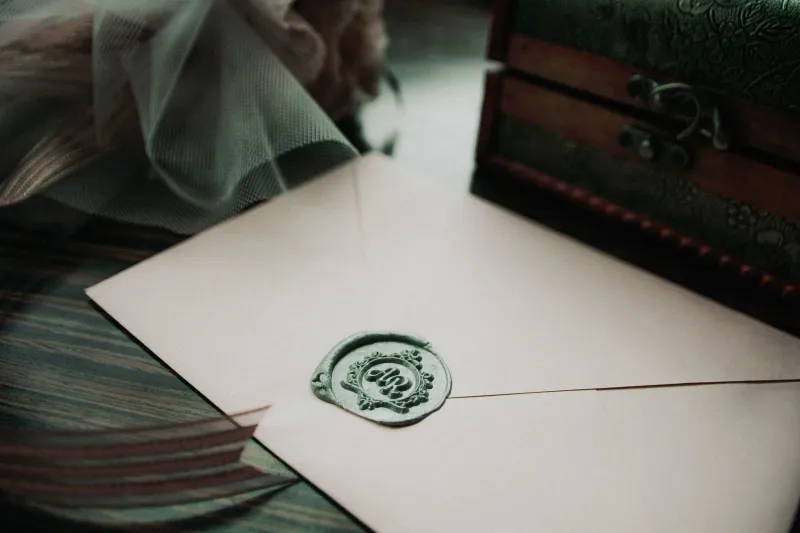
Introducing the Aesthetic Alibi — a formally typeset, wax-sealed, courier-delivered certificate that explains, in language so sophisticated it practically hums, exactly why the thing you bought was actually an intentional curatorial decision. Starting at $415. Tiered by complexity. Guaranteed to make anyone who reads it feel slightly undereducated for having questioned you in the first place.
The Origin Story, Which Is Extremely On Brand
The concept emerged, according to people familiar with the matter who spoke on condition of anonymity because they find the whole thing embarrassing and also brilliant, from a customer service anomaly at a mid-tier luxury house in late 2022.
A client — a VP of something in San Francisco — had purchased, during a particularly aggressive flash sale, a $780 statement coat in a shade that could only be described as 'aggressive persimmon.' She wore it once. The responses were not kind. She called the brand's customer service line not to return the coat, but to ask if someone there could 'explain it for her' — provide some cultural context that would allow her to defend the purchase to her colleagues without having to admit she bought it at 11:47 PM during a Negroni and a Netflix documentary about maximalism.
 Photo: San Francisco, via cdn.britannica.com
The customer service representative, improvising, wrote her a paragraph. It mentioned 'the Milanese color revival,' 'post-pandemic chromatic assertion,' and 'the coat as a reclamation of pre-austerity sensibility.' It was complete nonsense. It was gorgeous. The client forwarded it to six people. Two of them wanted one.
A vertical was born.
The Tiered Pricing Structure, Explained With a Straight Face
The Aesthetic Alibi service currently operates across four pricing tiers, each calibrated to the complexity of the justification required.
The Standard Curatorial Defense — $415 For purchases that are embarrassing but not catastrophic. A questionable trend item, a color that didn't translate from screen to reality, a silhouette that made sense in the fitting room and has made sense nowhere else. The Standard Certificate arrives on heavy cotton stock, references two to three current cultural movements, and concludes with a sentence so confident in its framing that it effectively dares anyone to disagree.
Sample language: 'The acquisition of this piece reflects a deliberate engagement with the transitional moment in American sportswear wherein ironic volume became the primary language of post-minimalist self-expression.'
Translation: You bought a very big shirt.
The Ironic Purchase Package — $529 For items that were purchased with full awareness of their absurdity but which now require retroactive evidence that the irony was intentional and sophisticated rather than impulsive and poorly considered. This tier is particularly popular among people who bought something from a fast fashion brand 'as a joke' and then wore it repeatedly because it was actually extremely comfortable.
The certificate for this tier includes a footnote. The footnote is where the real work happens.
The Gifted Disaster Documentation — $389 Slightly more affordable because the item was technically not your fault. This certificate formally establishes, with the authority of a notarized document and the tone of a museum acquisition note, that the piece in question was received as a gift and that your continued ownership of it represents not poor taste but admirable loyalty to a human relationship. The brand will not name the gifter. The brand will not name the item. The certificate describes only 'a received object' and your 'gracious integration of it into an evolving aesthetic dialogue.'
Clients report that this one makes them feel genuinely absolved.
The 'I Was Going Through Something' Narrative Package — $715 The premium tier. For purchases made during periods of personal upheaval — a breakup, a career transition, a particularly destabilizing birthday — that resulted in wardrobe items which now function primarily as artifacts of psychological archaeology. This certificate is longer. It includes a timeline. It frames the purchase not as a mistake but as 'a textile expression of a transformational threshold,' and it does so with enough clinical elegance that reading it feels, clients say, like being understood by someone who charges $400 an hour and never judges you.
The 'I Was Going Through Something' package comes in a box. The box has a ribbon. The ribbon is the color of closure.
The Technology Behind the Tenderness
The certificates are not, it should be noted, written by humans in the traditional sense. The service uses what its founders describe as a 'Cultural Context Engine' — a proprietary system trained on a decade of fashion criticism, gallery press releases, and the collected essays of people who have made careers out of explaining why things that look strange are actually profound.
Clients submit a photo of the item, a brief description of the purchase circumstances, and a list of the people they most need to convince. The system generates a draft. A human editor — listed on the website as a 'Narrative Aesthetician,' which is a job title that should not work but does — refines it. The final document is printed, sealed, and shipped within five business days.
The system is, by all accounts, extremely good at its job. It has successfully rehabilitated: a beret, multiple instances of visible logomania, at least three pairs of dad sneakers purchased before dad sneakers were cool and retained past the point at which they became cool again and then became uncool again, and one truly spectacular fur-trimmed parka that a client in Minneapolis describes as 'the purchase that nearly ended my marriage and is now framed in our hallway.'
The Deeper Anxiety This Is Selling To
It would be easy — and accurate, and fair — to mock the Aesthetic Alibi as a monument to the modern inability to simply own a bad decision without requiring institutional validation. And Vogue Vapor is not above that reading. We are, in fact, very comfortable in that reading.
But there is something more interesting happening here, which is that the service has correctly identified a genuine and widespread cultural condition: the creeping sense that your wardrobe is being evaluated at all times, by everyone, including yourself, and that without a coherent narrative framework your purchases are just purchases rather than expressions of a curated identity with depth and intention.
Instagram created this anxiety. Pinterest sharpened it. TikTok gave it a comments section. And the Aesthetic Alibi is simply charging $415 to relieve it, one wax-sealed certificate at a time.
Is it worth it? That depends entirely on how much you spent on the thing you're trying to justify, and how many people have asked about it, and whether you are the kind of person who can look at a certificate with the words 'chromatic assertion' on it and feel, genuinely, better.
If you are that person — and statistically, you might be — the ribbon alone is probably worth the price.
The box is beautiful.
The item inside your closet is still the item inside your closet.
But now it has paperwork.